- Get link
- X
- Other Apps
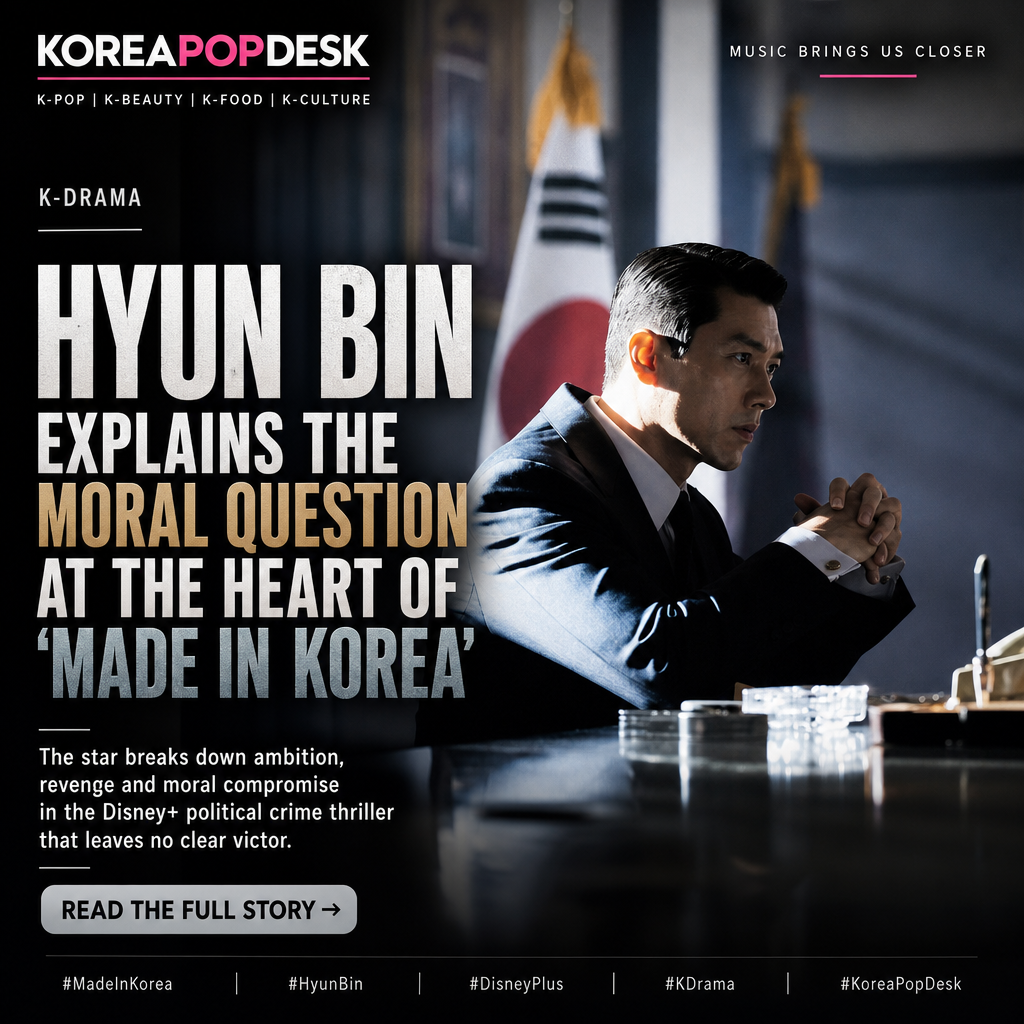
Spoilers for both seasons of Made in Korea follow.
Disney+’s political crime thriller Made in Korea has ended its two-season story without offering an uncomplicated victory. Its closing chapter instead completes the transformation of two adversaries who entered the series with sharply different principles but gradually adopted the methods of the system surrounding them.
Speaking to The Hollywood Reporter, Hyun Bin said the series’ larger question concerns how people understand those whose beliefs and methods differ from their own. That reading places the finale’s violence and reversals within a broader examination of ambition, revenge and moral compromise.
Baek Ki-tae loses control of his carefully built system
Hyun Bin’s Baek Ki-tae begins the drama as a Korean Central Intelligence Agency officer who secretly uses the drug trade to build wealth and influence. His principal opponent, prosecutor Jang Geon-young, is introduced as a public servant determined to eliminate that trade.
Baek repeatedly anticipates Jang’s moves during the first season. He frames the prosecutor for drug offenses and uses threats against Jang’s younger sister to protect his operation. When Jang returns in the second season, he is more calculating and prepared to cross lines that the earlier version of the character would have rejected.
The final episode reverses their established dynamic. Baek’s network begins collapsing, and Jang is finally able to move ahead of his rival. Yet the prosecutor’s pursuit of revenge has also changed him, leaving neither man able to claim a clear moral victory.
Baek shows unexpected restraint while confronting people who betrayed him. He wounds Chief Secretary Cheon and KCIA subordinate Pyo Hak-su rather than killing them. During his last encounter with Jang, the injured Baek also leaves his longtime enemy alive after shooting him in the arm.
Hyun Bin described this loss of control as unfamiliar territory for a character accustomed to planning several moves ahead. The actor connected Baek’s reaction to the complicated emotions produced when circumstances stop following his design.
The final confrontation returns the story to Baek’s family
The closing conflict is not decided by Jang. It rests with Baek’s younger brother, Baek Ki-hyeon, played by Woo Do-hwan.
Baek has spent the series trying to protect his siblings, but that protection becomes another form of control. Ki-hyeon wants to follow an honorable path through the military and support their sister through legitimate means. His older brother’s expanding web of political influence, violence and illegal money makes that independence increasingly difficult.
The brothers eventually face each other with guns drawn at a dockyard. A gunshot is heard, followed by flashbacks, but the episode does not explicitly show Ki-hyeon shooting Baek or reveal Baek’s body. The staging gives their confrontation emotional finality while leaving the precise outcome unseen.
Woo Do-hwan said his working relationship with Hyun Bin grew closer during production despite the difficulty of portraying brothers divided by a complicated bond. He credited the older actor with offering careful suggestions and creating trust between them on set.
Background: The rivalry began with a six-episode first season
Made in Korea premiered on Disney+ on December 24, 2025. Its first six-episode season concluded on January 14, 2026, with Baek still holding the advantage over Jang and further conflict left unresolved.
The story is set against South Korea’s turbulent 1970s and places fictional characters alongside historical events. Those references include the 1970 Yodogo hijacking, President Park Chung-hee’s 1979 assassination and the power struggle preceding the December 12 military coup.
Season two began on September 9, 2026, moving the rivalry forward by nine years. Baek had risen within the intelligence service and expanded his influence, while Jang emerged with a long-prepared plan for revenge. Disney identified the second season as the conclusion of the series.
Why the ending matters for international viewers
The finale changes how the central rivalry should be understood. Jang does not simply defeat a corrupt official while preserving his own values. His campaign against Baek draws him deeper into the same coercive system he once opposed, including the brutal treatment of people connected to his target.
For viewers outside Korea, the distinction between history and invention is also important. The series uses recognizable events from modern Korean history, but Baek, Jang and their personal contest are part of a fictionalized thriller rather than a documentary account.
Hyun Bin’s explanation supports that less binary reading. The final question is not limited to which man wins. It is what remains of their original convictions after both pursue power inside a corrupt structure. The series closes on that question with the dockyard gunshot heard but Baek’s ultimate fate left off-screen.
Sources: The Hollywood Reporter via Yahoo News Malaysia; Time; The Walt Disney Company.
Comments
Post a Comment